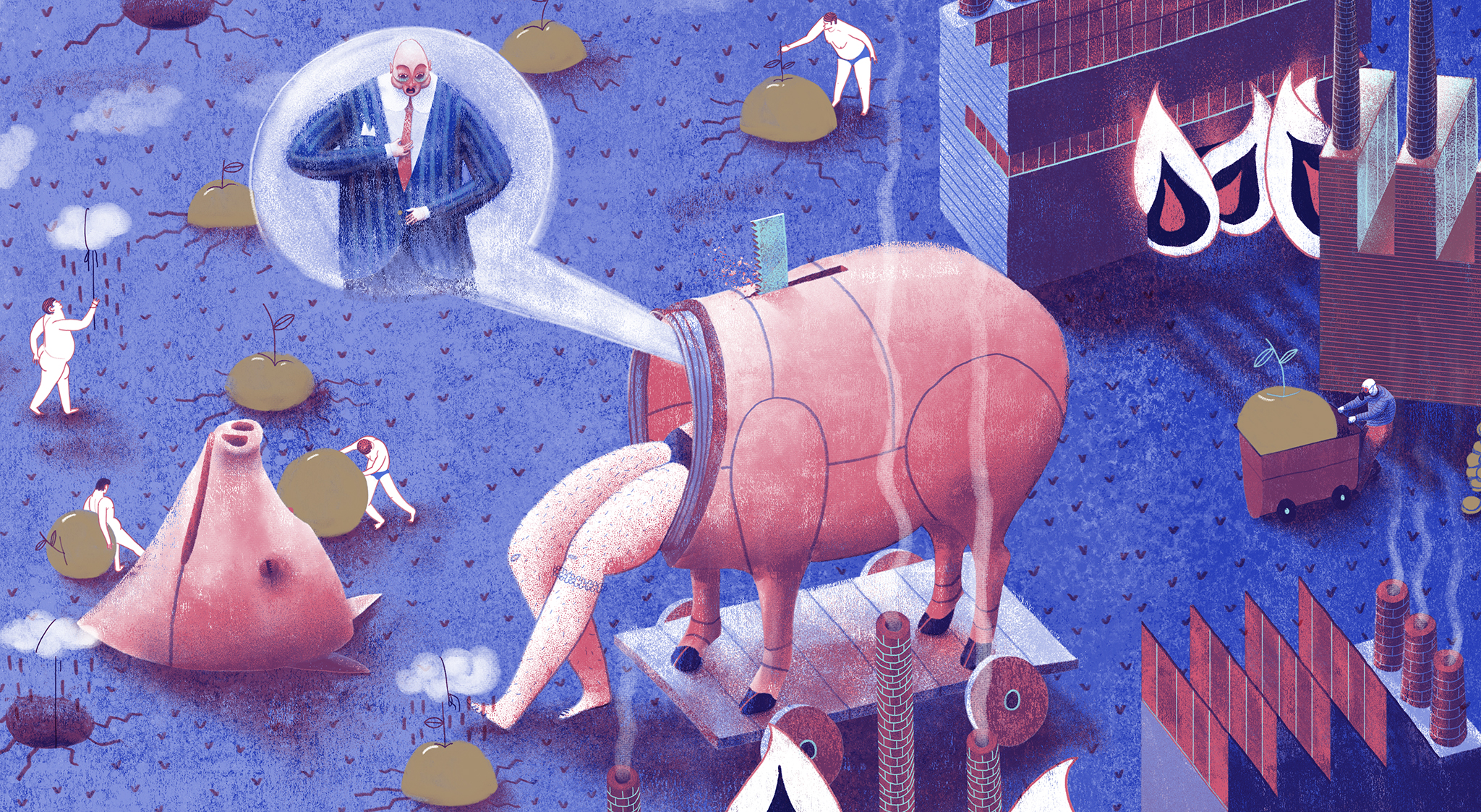
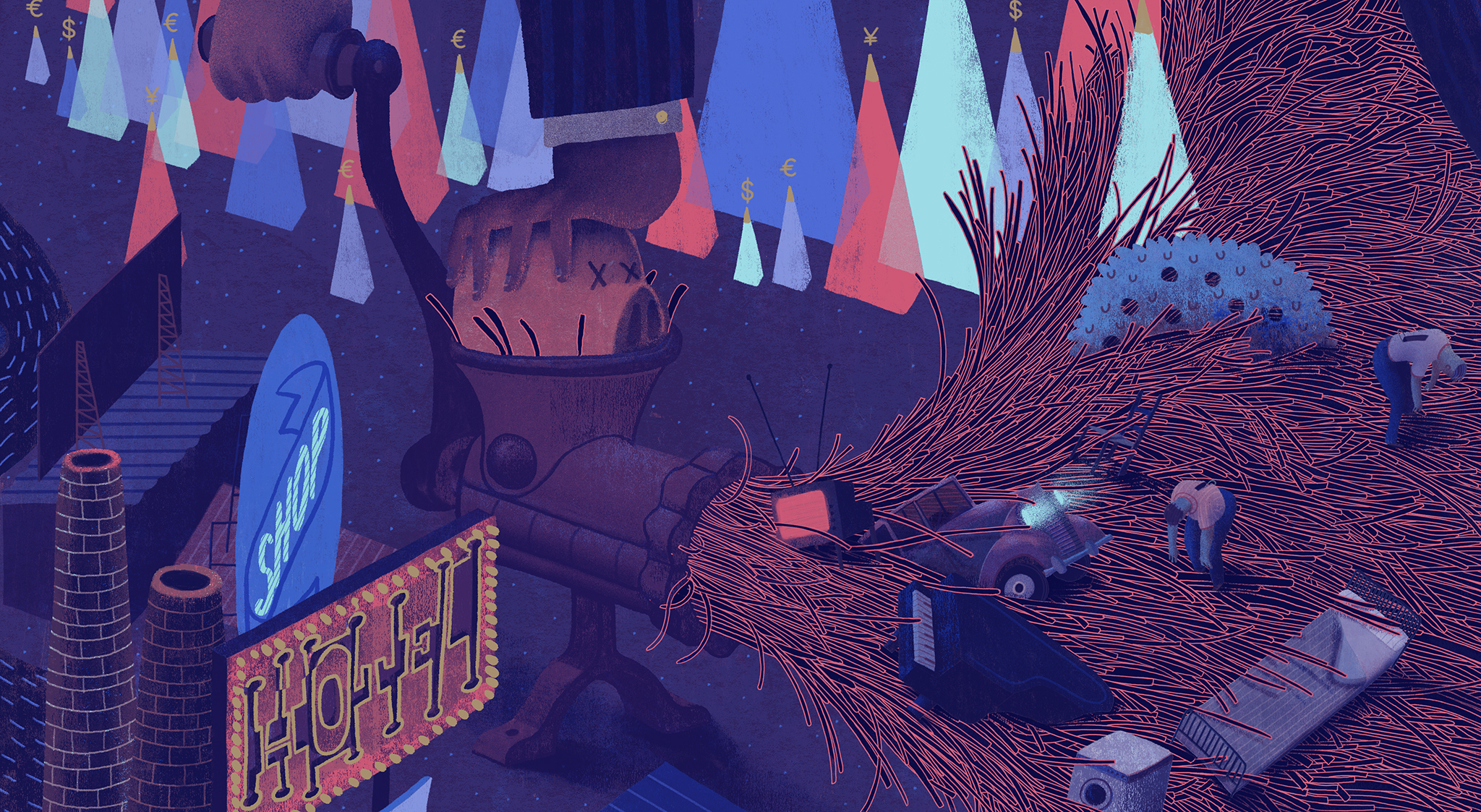
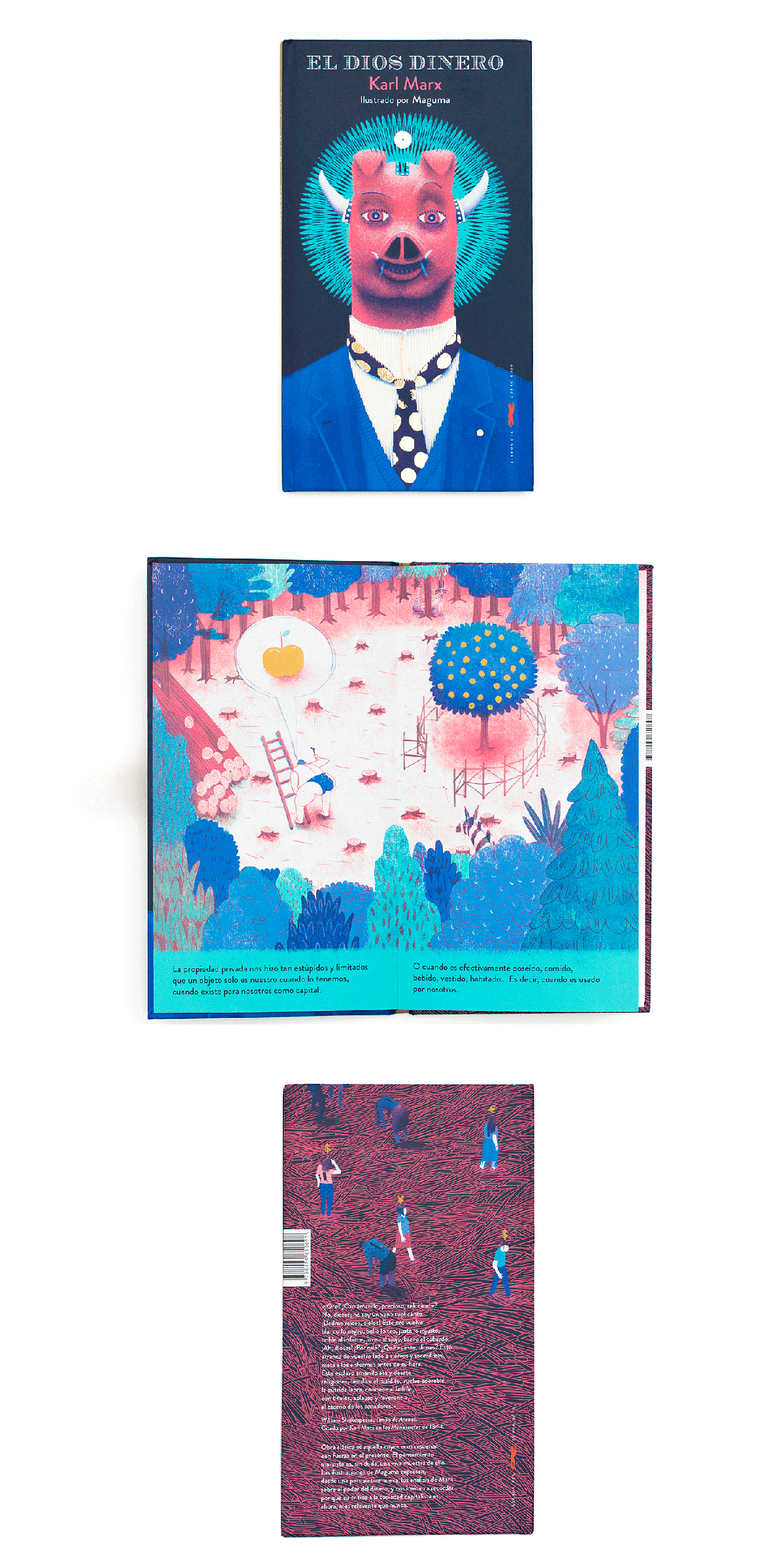
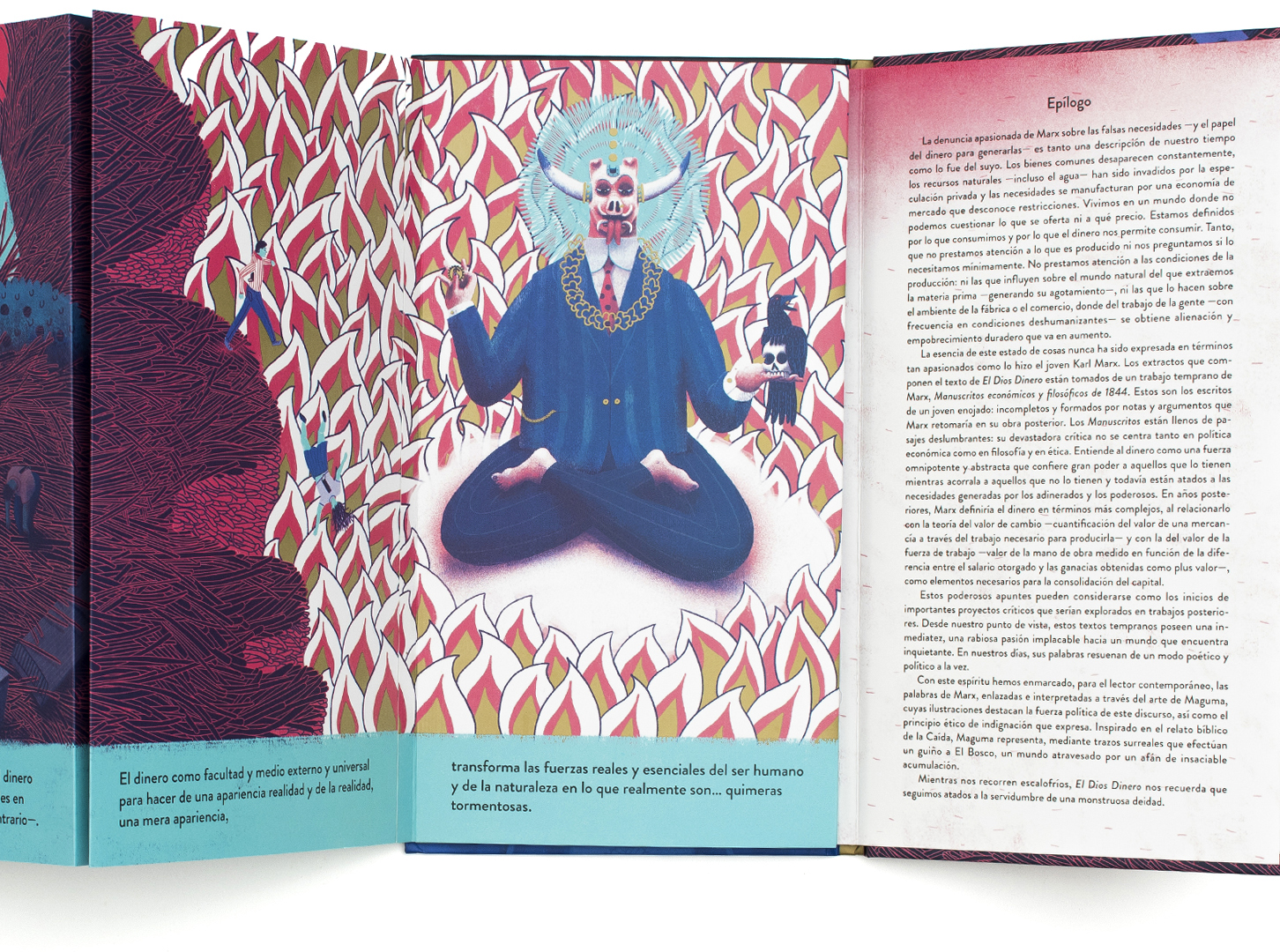
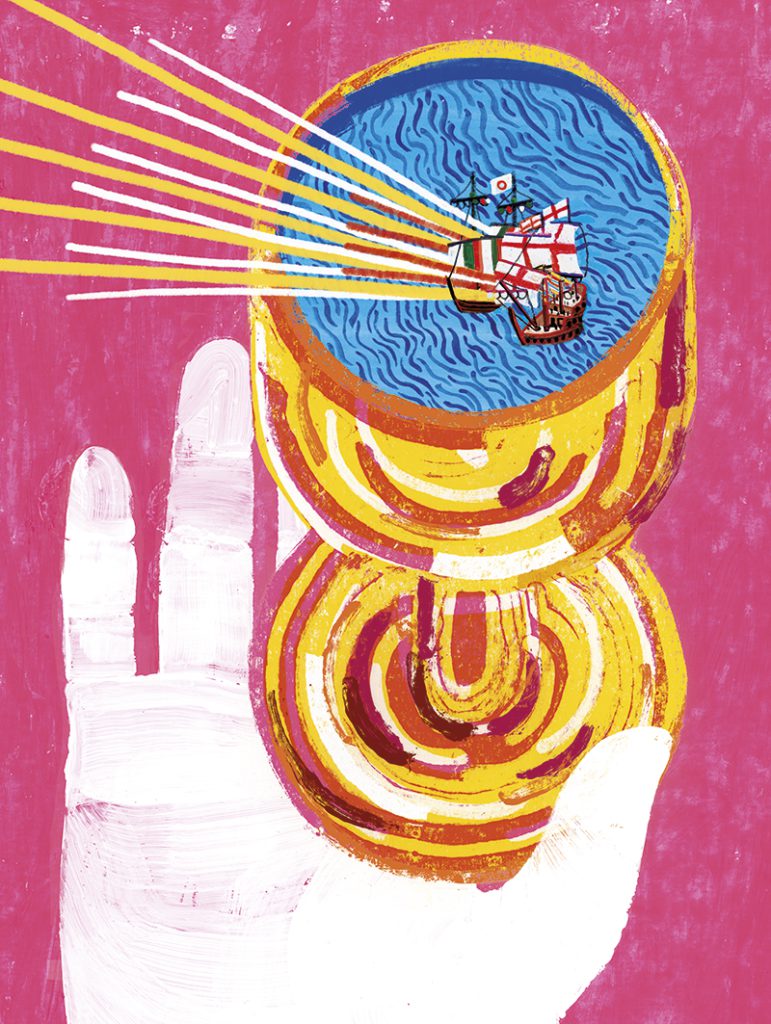
Interpreted for the twenty-first century, God of Money is based on extracts from Karl Marx’s famous chapter on money, published in Economic and Philosophic Manuscripts, 1844. Marx was a young man at the time, critical and defiant of an emergent world of rampant greed and consumption.
Private property has made us so stupid and one-sided that an object is only ours when we have it – when it exists for us as capital.
Or when it is directly possessed, eaten, drunk, worn, inhabited, etc. – in short, when it is used by us.
That which is for me through the medium of money –
That for which I can pay (i.e., which money can buy), that am I myself, the possessor of the money.
That which I am unable to do as a man, and of which therefore all my individual essential powers are incapable,
I am able to do by means of money. Money thus turns each of these powers into something which in itself it is not – turns it, that is, into its contrary.
To know more about the creative process of God of Money, click here